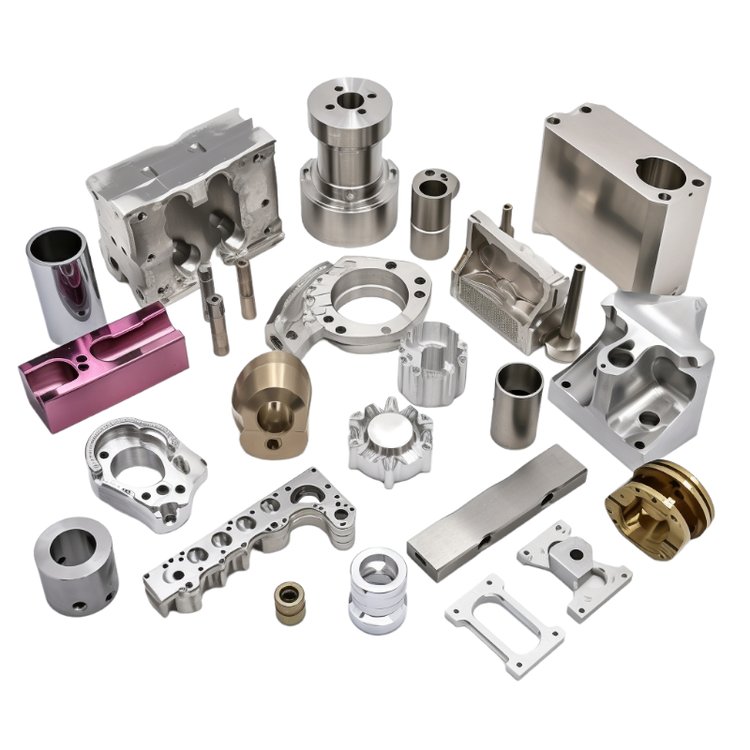
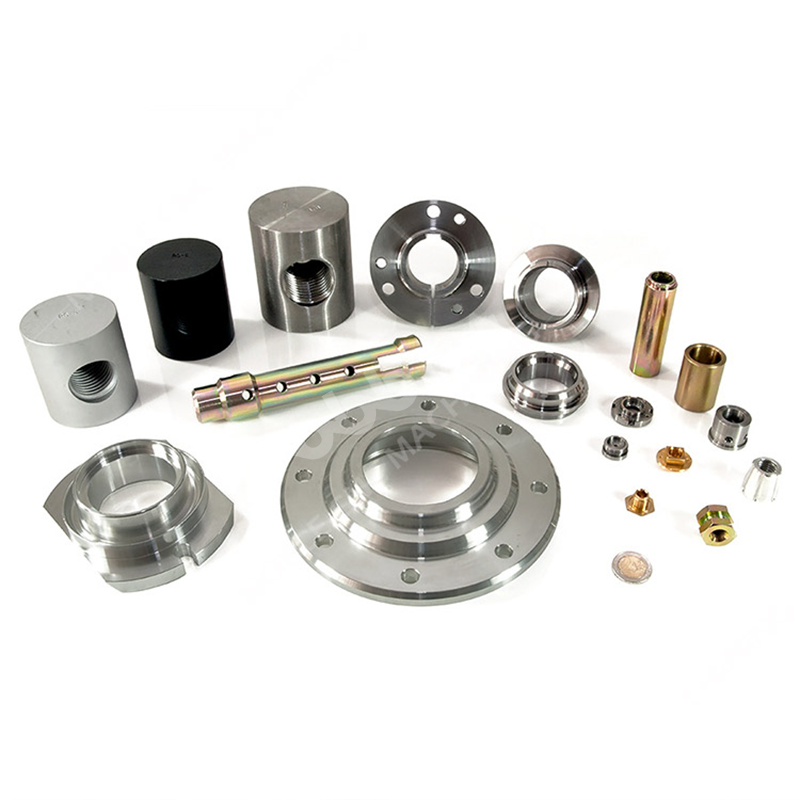
CNC (Computer Numerical Control) machining is a modern manufacturing process that uses pre-programmed computer software to control machine tools and tools for precise manufacturing. It covers the production of various parts, ranging from simple to extremely complex.
I. Core Advantages of CNC Machining
1. High precision and repeatability: CNC machines can process with micron-level (0.001mm or even higher) accuracy and can perfectly replicate exactly the same parts in batches, ensuring highly consistent product quality.
2. Complexity: It can easily manufacture complex geometries, three-dimensional surfaces, and precise internal cavities that are difficult or impossible to achieve through traditional manual processing.
3. High efficiency: Once the program is written and verified, the processing can run automatically and continuously, 24/7, which is particularly suitable for large-scale production.
4. Flexibility: Changing the processing design only requires modifying the computer program, without the need to replace expensive tooling and fixtures, making it very suitable for prototype making and small-batch, multi-variety production.
5. Safety: The main responsibility of the operator is to monitor the machine and load and unload parts, staying away from cutting tools, creating a safer working environment.
II. Common CNC Machining Processes
1. CNC Milling
· Principle: The workpiece remains stationary while the rotating multi-edge cutting tool (end mill) moves in multiple axes to perform cutting on the material.
· Characteristics: It is suitable for processing flat surfaces, grooves, gears, splines, and various complex cavities and curved surfaces.
· Common machine tools: Three-axis, four-axis, and five-axis CNC machining centers. Five-axis machine tools can complete the all-round processing of complex parts in a single setup with extremely high precision.
2. CNC Turning
· Principle: The material bar rotates in the spindle, and the fixed tool (lathe tool) moves linearly or along a curve to perform cutting.
· Features: It is mainly used for processing cylindrical, conical or disc-shaped parts, such as shafts, sleeves, threads, flanges, etc.
· Common machine tools: CNC lathes, turning-milling centers. The turning-milling center integrates turning and milling functions and is more powerful.
3. Other Processes
· CNC drilling: mainly used for drilling and tapping.
· CNC grinding: used to achieve extremely high surface finish and precision.
· CNC wire cutting: uses a moving metal wire (electrode) for electrical discharge cutting, suitable for high-hardness materials and precision molds.
· CNC laser cutting/engraving: uses a high-energy laser beam for cutting or surface treatment.
III. Commonly Used Processing Materials
Almost all engineering materials can be processed by CNC.
· Metals: Aluminum alloy (the most commonly used), steel (carbon steel, stainless steel), brass, copper, titanium alloy, magnesium alloy, etc.
· Plastics: ABS, PC (polycarbonate), POM (acetal), PMMA (acrylic), nylon, PTFE (Teflon), etc.
· Composite materials: Carbon fiber board, G10/FR4 epoxy board, etc.
· Wood: Dense wood, plywood, etc.
IV. Application Fields of CNC Machining
CNC machining has almost permeated all precision manufacturing industries.
· Aerospace: Engine blades, fuselage structural components, landing gear parts, etc. (Often made of titanium alloys and high-strength aluminum alloys).
· Automotive industry: Engine blocks, transmission gears, drive shafts, prototype parts, etc.
· Medical devices: Surgical robot components, orthopedic implants, dental equipment, endoscope parts (requiring extremely high biocompatibility and precision).
· Electronic products: Mobile phone frames, heat sinks, connectors, chip test fixtures, etc.
· Industrial equipment: Robot joints, parts for automated equipment, molds, jigs and fixtures.
· Consumer products: Digital camera shells, high-end audio components, customized gifts, etc.
V. The Process from Design to Finished Product
1. Design: Use CAD software (such as SolidWorks, AutoCAD, Fusion 360) to create 3D models of parts.
2. Programming: Use CAM software (such as Mastercam, PowerMill) to convert 3D models into G-code instructions that CNC machines can recognize, and set parameters such as tool paths, spindle speeds, and feed rates.
3. Setup: The operator selects the appropriate tools and clamps, fixes the raw material blank to the machine table, and sets the origin (tool setting).
4. Machining: Run the program, and the machine automatically performs the cutting process. The operator conducts real-time monitoring.
5. Post-processing: After machining, the parts may require surface treatments such as deburring, polishing, sandblasting, anodizing, painting, and electroplating.
6. Quality Control: Use tools such as calipers, micrometers, and coordinate measuring machines (CMM) to inspect the finished products to ensure they meet the drawing requirements.